
NAVIEN BOILER SOUNDS & TROUBLESHOOTING
Why Is My Navien Boiler Making a Gurgling Noise?
Why is a Navien boiler making a gurgling or bubbling noise? Learn what trapped air, circulation, pressure, or model-specific problems can mean and when to call a qualified Long Island technician.
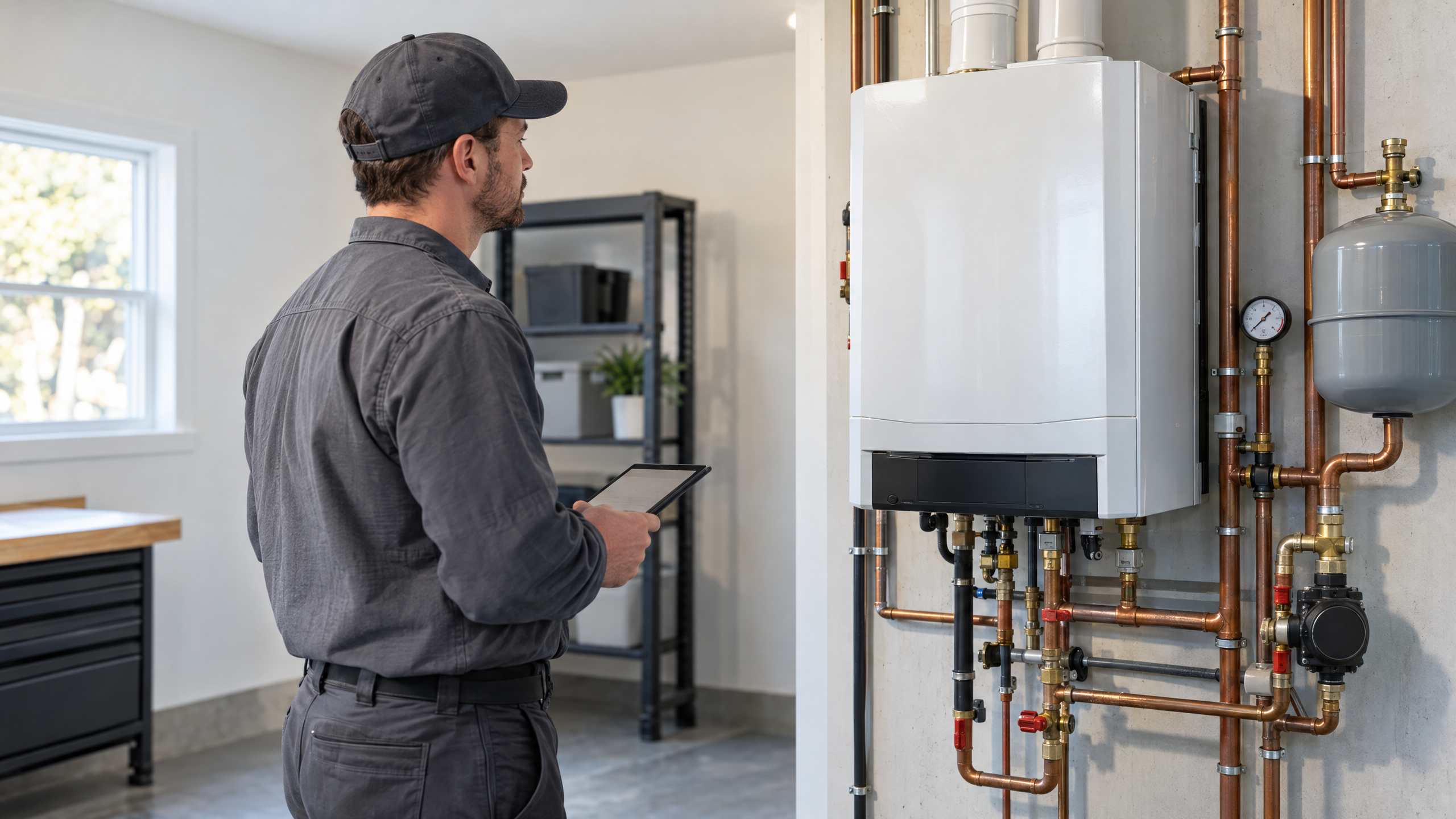 Editorial image · For illustration only
Short answer: A gurgling, bubbling, or trickling sound from a Navien boiler or its heating pipes often means air or a circulation problem somewhere in the hydronic system. Low pressure, a restriction, a component problem, or another model-specific condition can sound similar. The noise is a reason to document the symptom and arrange qualified service—not to open the cabinet, change settings, or repeatedly add water.
For a Long Island homeowner, note where the sound seems to come from, when it starts, whether the home is heating normally, and whether the display shows a message or code. Navien says homeowner troubleshooting is limited because the equipment involves water, electricity, and gas, and recommends the original installer or a Navien Service Specialist for troubleshooting.
Why is my Navien boiler making a gurgling noise?
A boiler heats and circulates water through a hydronic heating system. When air is present, water flow is restricted, pressure is unstable, or a component is not operating correctly, the system may produce sounds that resemble gurgling, bubbling, sloshing, or trickling. The sound alone cannot identify the cause.
What can the sound indicate?
Air in the hydronic system
Navien explains that air in a boiler system can contribute to overheating or prevent pumps from circulating water. Air may collect at high points in piping or emitters and can be heard as water moves through the system. A technician needs to determine whether air is present and why the system has not removed it normally.
Low or unstable system pressure
Pressure that is too low or changing unexpectedly can make circulation noisy and may leave some rooms or zones cooler than others. A pressure reading must be interpreted using the exact Navien model, installation, temperature, and system design. Do not chase a noise by changing the fill valve or repeatedly adding water.
Restricted circulation or a component issue
A circulator, valve, control, filter, heat exchanger, or another part of the heating system may affect water movement. The U.S. Department of Energy lists professional checks of hot-water heating components such as the circulator, heat exchanger, pressure-relief valve, high-limit control, and pressure tank. These are not homeowner repair tasks.
Kettling, scale, or overheating
A rumbling or bubbling sound near the boiler can sometimes be associated with restricted flow or mineral buildup that allows localized overheating. Similar sounds can have different causes, and the water quality, heat exchanger, system design, and model all matter. A qualified technician should diagnose the equipment rather than treating the sound with an improvised flush or chemical.
A different heating-system problem
Noise may come from a radiator, baseboard, pipe support, condensate path, expansion component, or another part of the installation rather than the boiler itself. A technician can compare the sound with the display, temperature, pressure, and affected zone to locate the source.
What can I safely observe before calling?
- Note whether the sound occurs during startup, while the boiler is heating, after shutdown, or continuously.
- Record the boiler model, visible display message, and any error code without opening the cabinet.
- Check whether all rooms and zones are heating normally or whether one area is affected.
- Look only at accessible areas for visible water, staining, corrosion, or dripping near exposed piping. Do not remove panels.
- Take a short recording of the sound and a photo of the display for the technician if it can be done safely.
Do not bleed radiators, adjust system pressure, open a relief valve, drain the boiler, change gas or combustion settings, alter venting, work on wiring, open the cabinet, bypass a lockout, or defeat a safety control. Navien states that internal components should be serviced only by a qualified contractor.
When is boiler noise an emergency?
Leave the area and call 911 or the gas utility as appropriate if you smell gas, a carbon-monoxide alarm sounds, anyone has headache, dizziness, weakness, nausea, vomiting, sleepiness, or confusion, there is smoke or fire, or water is actively reaching electrical equipment. The CPSC says to get outside to fresh air immediately and call 911 when carbon-monoxide poisoning is suspected. Do not re-enter until the appropriate emergency or utility professional says it is safe.
If there is no immediate emergency but the gurgling repeats, the boiler shuts down, rooms stop heating, pressure changes, or the sound becomes louder, arrange qualified Navien service promptly. Repeated resets or refilling are not a substitute for diagnosis.
Questions homeowners often ask
Can I bleed the radiators myself?
Do not begin by bleeding or draining the system unless the exact installed-system instructions and a qualified professional make that action appropriate. Bleeding can change system conditions, and it does not explain why air or unstable pressure is present.
Does gurgling always mean the boiler is failing?
No. Air, circulation, pressure, pipe layout, water quality, or a component problem can produce similar sounds. The sound is useful information for a technician, but it is not a diagnosis by itself.
Should I keep running the boiler?
If the equipment is making a new or persistent noise, follow the installed manual’s shutdown guidance and contact a qualified professional. Turn it off and leave the area when there is a gas smell, CO alarm, smoke, fire, active water hazard, or other emergency condition.
Next steps for a Long Island homeowner
Document the sound and display, keep clear of active leaks or unsafe equipment, and contact a qualified Navien service professional. For service planning, see Navien boiler repair and installation, review Long Island service areas, or request a free estimate. You can also read what repeated Navien boiler pressure loss can mean if pressure is changing with the noise.
Sources
Navien Residential Boiler FAQs
Navien NFB-301C product FAQs
Boyle Brothers Energy: Why Is My Boiler Making Noise?
U.S. Department of Energy HVAC: A Guide for Contractors to Share with Homeowners
U.S. Consumer Product Safety Commission: Carbon Monoxide Safety
This article is general homeowner information, not a diagnosis or a substitute for the installed model’s manual, applicable codes, or an on-site evaluation by a qualified professional.